By Mary Wilcox
HEALTH & WELLNESS
Kathie Canning is editor-in-chief of Dairy Foods.
Contact her at 847-405-4009 or canningk@bnpmedia.com.
The charm of cream cheese
How the quiet dairy workhorse re-emerges
Photo courtesy of Sinan Kocaslan / E+ / Getty Images

Mary Wilcox is the founder of Significant Outcomes LLC, an Ohio-based consultancy, providing technical and business expertise spanning both the dairy and food industries. She holds a B.S. in Biological Science, M.S. in Animal Nutrition and MBA in Business. Learn more at https://significantoutcomesllc.com.
Cream cheese is becoming a powerful vehicle for global flavor fusion, moving far beyond its traditional Western applications, and evolving into a canvas for regional tastes and storytelling.
Where the 1980s spotlighted appetizers like Crab Rangoon and cheese balls, today’s consumers gravitate toward bolder combinations such as tandoori sandwiches layered with mustard seed and curry leaf infused cream cheese, or kimchi cream cheese dips paired with chips.
As an ingredient, cream cheese not only is a great carrier of flavor, fermentation and aromatics, it also has a mild and tangy flavor, functional richness, and low caloric density compared to other spreads or dips. This makes the cultured dairy product ideal for individuals seeking comfort, taste and nutrition.
Commercial cream cheese is typically made from pasteurized milk and cream, salt, carob bean gum, and cheese culture. Based upon the U.S. Department of Agriculture: FoodData Central database (https://fdc.nal.usda.gov/food-details/173418/nutrients), the standard one‑ounce serving delivers about 99 calories, just under 10 grams of fat, slightly under two grams of carbohydrates and protein, with no fiber or added sugars. Cream cheese’s inherent simplicity provides a clean‑label story, for those consumers who gravitate toward short, recognizable lists of ingredients.
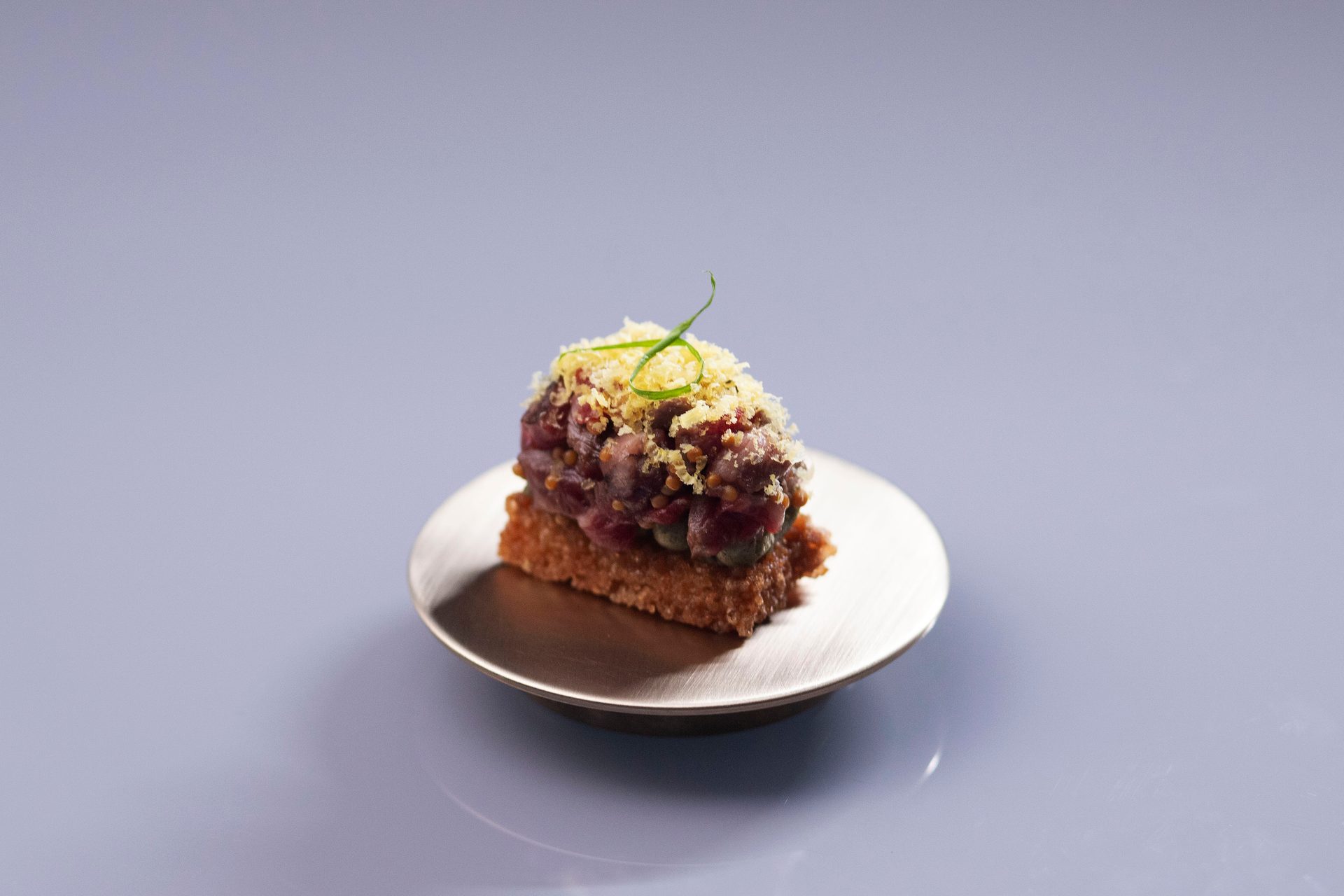
Blended cream cheese adds appeal on steak tartare.
Cream cheese continues to expand its footprint as companies explore and incorporate new savory ingredients into pastries, sandwiches, salads and pasta, highlighting its versatility beyond traditional dessert uses like cheesecake. It can also be incorporated into either sweet or savory fillings for artisanal breads and pastries.
Whether it be cream cheese egg bites recipes on YouTube or viral bagel, pasta and cookie recipes on TikTok, cream cheese is being rediscovered by U.S. consumers. In addition, as the refrigerated spreads category grows more competitive with hummus, yogurt dips, nut butters, and plant‑based spreads vying for attention, cream cheese has a clear opportunity to differentiate through flavor, functionality and potential fortification with probiotics, botanicals or fibers.
For example, Good Culture Probiotic Plain Cream Cheese Spread is made with live and active cultures to help boost the digestive system, while providing a neutral base for incorporation into dips and sauces.
Next-generation ultrafiltration and membrane processing technologies also allow processors to create higher protein and lower fat cream cheese products. Plus, aeration technologies are delivering unique textures. Philadelphia, Target’s Good and Gather, and Trader Joe’s branded products are delivering whipped cream cheese spreads at retail, which serve up a variety of flavors and textures containing even fewer calories per serving than traditional cream cheese.
Snackification remains one of the biggest untapped opportunities in the U.S. market, as consumers seek better‑for‑you indulgence in convenient, portable formats. Emerging concepts such as mix‑in dessert cups, cream cheese-filled protein bites, and refrigerated bars that merge the appeal of cheesecake with the nutrition of protein, demonstrate how cream cheese can bridge indulgence, functionality and satiety. These formats align with rising demand for high‑protein, lower‑sugar treat options and open the door for dairy processors to innovate with textures, inclusions and protein formulations that meet modern snacking expectations.

Cream cheese foam is a popular topping for beverages like milk tea and boba.
Globally, cream cheese is also a rising star. Amy Foor, certified cheese professional and vice president of cheese marketing and global foodservice programs at the Arlington, Va.-based U.S. Dairy Export Council, notes: “The United States has established itself as the world’s largest producer and exporter of cheese, enabling it to play a central role in supplying rising global cheese demand, including cream cheese. Asia represents one of the fastest‑growing destinations for U.S. cheese, driven by a combination of factors, such as rising disposable incomes, westernization of diets, and growth in the foodservice sector.
“The booming bakery and café sectors, along with a surge in home baking, are accelerating cream cheese consumption,” she continues. “Cream cheese plays an especially important role in sweet baked goods and premium dessert beverages, such as the immensely popular cheese tea where cream cheese is used to create a ‘cheese foam’ topping added to cold tea.”
Cream cheese is also finding a home outside of bakeries and cafes, being increasingly incorporated into localized dishes across Asia. For example, in Korea, fine-dining restaurant, Bicena, recently presented a series of dishes featuring distinctly Korean ingredients, such as pickled wild ramp, yuzu and dried seaweed, blended with U.S. cream cheese on top of steak tartare.
Head chef Jeon Gwang-sik, noted, “Our philosophy is to respect the core of Korean cuisine while giving it a modern touch. Bringing Korean elements together with cream cheese creates a really special moment where tradition, modernity and East–West influences all come together naturally.”
As more companies and culinary leaders in the U.S. and abroad discover the charm of cream cheese and its flavor‑carrying power, the opportunities for innovation and use will continue to expand for the U.S. dairy industry. DF
Article photos courtesy of U.S. Dairy Export Council