The importance of precise temperature control in dairy processing
PROCESSING TECHNOLOGIES
Photo courtesy of HRS Heat Exchangers.
Heat exchangers are a vital component of the dairy processing industry, enabling producers to control the myriad temperatures needed throughout production of milk, cream, butter, cheese and other dairy products.
The most common types of heat exchangers in dairy processing include plate, tubular, coiled and scraped surface heat exchangers. Each format offers different benefits to processors, but plate heat exchangers are most commonly used due to their easy-to-clean materials and high surface area.
By Sammy Bredar, Associate Group Editor
Heating and cooling processes help dairy processors control the quality, consistency and safety of their products.
The importance of precise temperature control in dairy processing

Precise temperature control is a crucial component of efficient, safe and high-quality dairy production. While heat exchangers enable precise temperature control in heating, they are also essential to cooling. Both heating and cooling processing eliminate harmful bacteria, ensuring food safety throughout production.
Shanti Bhushan, lead processing engineer for Hudson, Wis.-based GEA, says that sustainability initiatives are driving membrane filtration and separation equipment development, with particular emphasis on reduced energy, chemical and water consumption, in addition to waste and water valorization initiatives.
“The integration of advanced inline sensors and controls is also a key priority, aimed at enhancing production efficiency, improving product quality and reducing product losses,” Bhushan says.
To explore how heat exchangers can most effectively enhance dairy operations, Dairy Foods consulted with Tetra Pak Heat Exchangers Americas, Thermaline, Enerquip Thermal Solutions, Advanced Coil Technology and HRS Heat Exchangers.
Photo courtesy of Thermaline.
Energy efficiency
Keeping production costs low is a key consideration at any time, but especially in an era of high input costs. To keep utility bills low, dairy processors can utilize heat exchangers to ensure energy-efficient heat recovery.
Energy efficiency is a standout benefit of utilizing heat exchangers. Juliana Nicolosi, portfolio manager for Tetra Pak Heat Exchangers Americas, notes that indirect heat transfer enables heat regeneration.
“This process significantly reduces the need for external heating and cooling, lowering energy consumption (commonly up to 94%) and operational costs,” Nicolosi explains. She notes that even in direct heating systems, indirect preheating can improve energy efficiency, minimizing steam usage and improving system performance.
By recovering heat from outgoing streams and reusing it, heat exchangers help dairy plants lower energy use. “This reduces the load on boilers and chillers, leading to direct savings on fuel and utilities. Their efficient thermal design minimizes energy waste while improving sustainability,” Will McCarron, sales engineer for Enerquip Thermal Solutions, says.
Matt Hale, global key account director for HRS Heat Exchangers, says that corrugated tube and scraped surface heat exchangers ensure that optimal levels of heat transfer are maintained throughout the production process to prevent fouling, which reduces process efficiency.
Nicolosi notes that, in addition to energy efficiency improvements, heat exchangers help processors reduce operational costs by minimizing product loss, shortening cleaning cycles and enabling longer production runs. “These efficiencies translate into lower utility bills, reduced waste, and improved sustainability; key concerns for modern dairy processors,” she says.
Stuart Benson, engineering manager for Thermaline, says that plate heat exchangers are most commonly used to increase energy efficiency, as well as reduce the utility cost of both heating and cooling a dairy product.
“At Thermaline, we have an applications engineer review the process and design a heat exchanger that fits the process. This allows us to increase energy efficiency throughout the heat exchanger by balancing pressure drop, processing temperatures and heat exchanger size,” Benson says. “Heat transfer isn’t free. Processing plants are paying for rapid heat transfer through pumping power, capital cost of equipment and heating and cooling utility cost.”
Devon Barnes, general manager for Advanced Coil Technology, notes that equipment durability is a key consideration when looking at new heat exchangers. By selecting systems with durable design and materials, processors can achieve long-term sustainability. Cleanability goes hand in hand with durability; systems must be durable enough to withstand years of use, while at the same time undergoing constant rigorous cleaning and sanitation procedures, Barnes states.
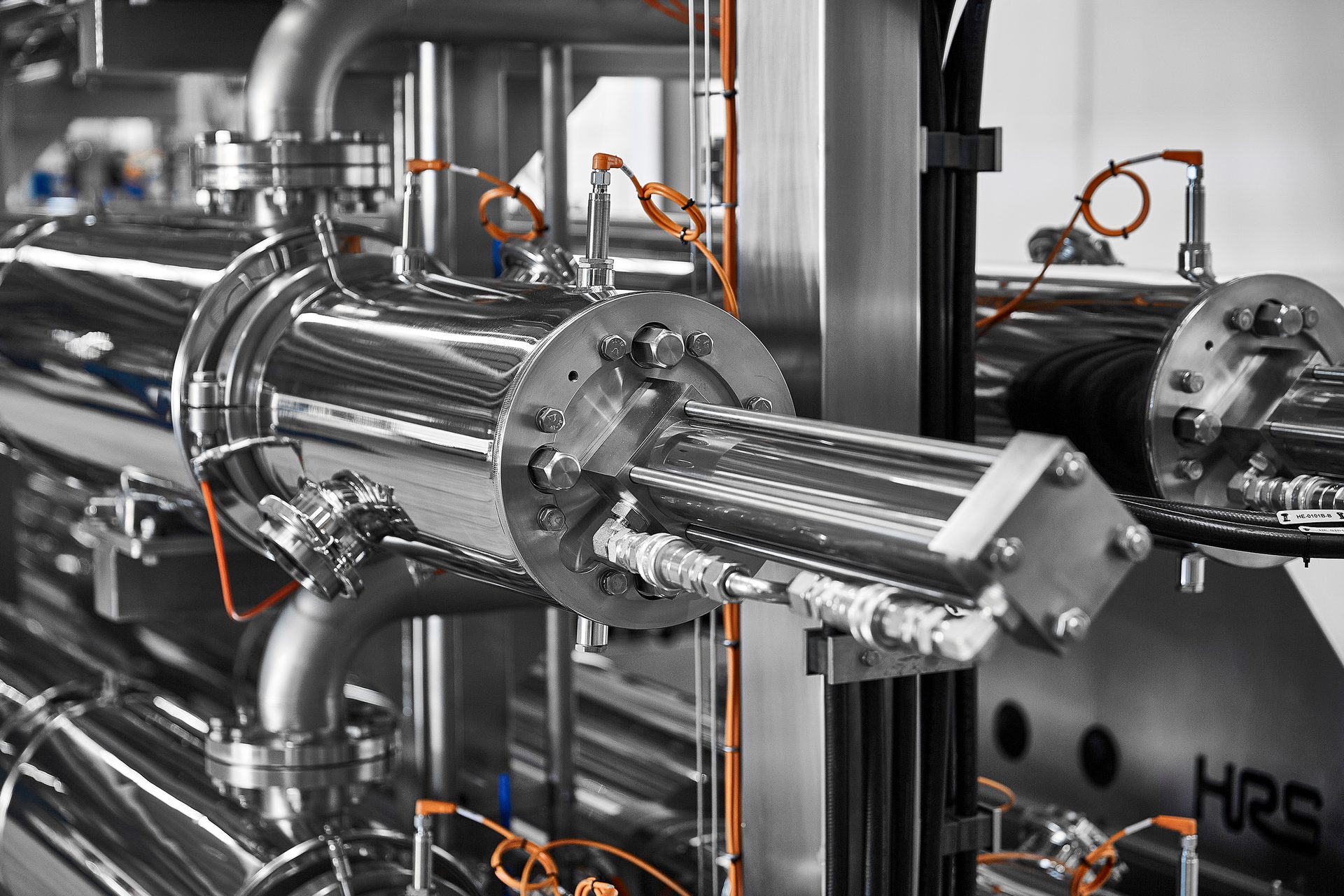
HRS Unicus Series reciprocating scraped surface heat exchanger. Photo courtesy of HRS Heat Exchangers.
Choosing the right heat exchanger
Heat exchangers must have a hygienic design, particularly in an industry like dairy processing. To ensure that maximum hygiene standards are being met, processors must ensure their heat exchangers offer clean-in-place (CIP) capabilities.
Nicolosi notes that key sanitary design features for heat exchangers include smooth, crevice-free surfaces, hygienic welds and materials that resist corrosion and biofilm formation. “It is also essential that the plate configuration is carried out by someone with the appropriate expertise, as proper setup is crucial to ensure both effective heat treatment and cleaning,” she says.
McCarron adds that sanitary shell and tube exchangers are designed to meet food safety standards while eliminating contamination concerns. “Polished stainless surfaces and optimized flow paths prevent bacterial buildup, while CIP-friendly designs keep cleaning a breeze.”
While heat exchangers present multiple benefits in dairy production, processors must ensure they are picking the right equipment for their operation, not only to ensure maximum return on investment (ROI), but optimize food safety, quality and consistency, as well as process and energy efficiency. Nicolosi says that selecting the appropriate heat exchanger for each product type is essential.
“As a relatively stable Newtonian fluid, liquid milk presents few handling challenges, but other dairy products such as yogurt, butter, curds and cheese can all vary according to temperature and, if handled incorrectly, may have their key textural parameters damaged by routine processing. Choosing the right type of heat exchanger system is therefore crucial,” Hale says.
By selecting the right heat exchanger, dairy processors can optimize heat transfer, increase production flexibility, reduce fouling and ensure product quality and consistency. “This versatility allows for efficient processing of a wide range of dairy products, from basic milk to complex formulations,” Nicolosi says.
The compact design of heat exchangers enables processors to implement larger processing systems to increase production within a confined footprint. Hale notes that, since corrugated shell and tube heat exchangers are more efficient than smooth tube equivalents, units can be made smaller, which reduces required materials and simplifies installation.
Barnes notes that high-volume operations particularly need large coils; lightweight coals may not handle stresses of large-volume production. He also says that higher operating pressures and temperatures enable increased throughput.
“Shell and tube heat exchangers are built for continuous, high-capacity flow, ideal for fast-paced dairy environments. Their large surface area and efficient thermal transfer help reduce cycle times while keeping product quality and food safety intact,” McCarron says. He notes that productivity-focused features include high-flow handling, fast thermal response and minimal downtime.
McCarron agrees, noting that modern heat exchangers offer strong returns via lower utility bills, higher throughput and increased equipment life. “Their cleanability and performance improvements also help reduce waste and extend product shelf life,” he says.
With strong demand for dairy products, producers are looking to scale up operations and meet consumer needs. Benson notes that Thermaline generally sees the largest processing enhancements on facilities that undergo retrofits or expansions. “We typically see this once a dairy has begun expanding other aspects of the processing facility such as new fillers or storage tanks,” he says.
Modern heat exchangers
To ensure maximum efficiency, processors must utilize heat exchangers that are up to date for current production needs. Benson notes that investing in a modern heat exchanger will provide a strong return to both new and existing processors.
“Utilizing a new modern heat exchanger allows our engineers to tune the pressure drop, heat transfer rate and clean-in-place process to best match the dairy’s new process requirements,” he says.
“Investing in modern heat exchanger technology offers a clear return on investment through a combination of cost savings, improved product quality, and enhanced operational flexibility,” Nicolosi relays. “Additionally, the long-term savings from reduced energy use, lower maintenance requirements, and decreased product waste contribute to a strong financial case for upgrading to modern systems.”
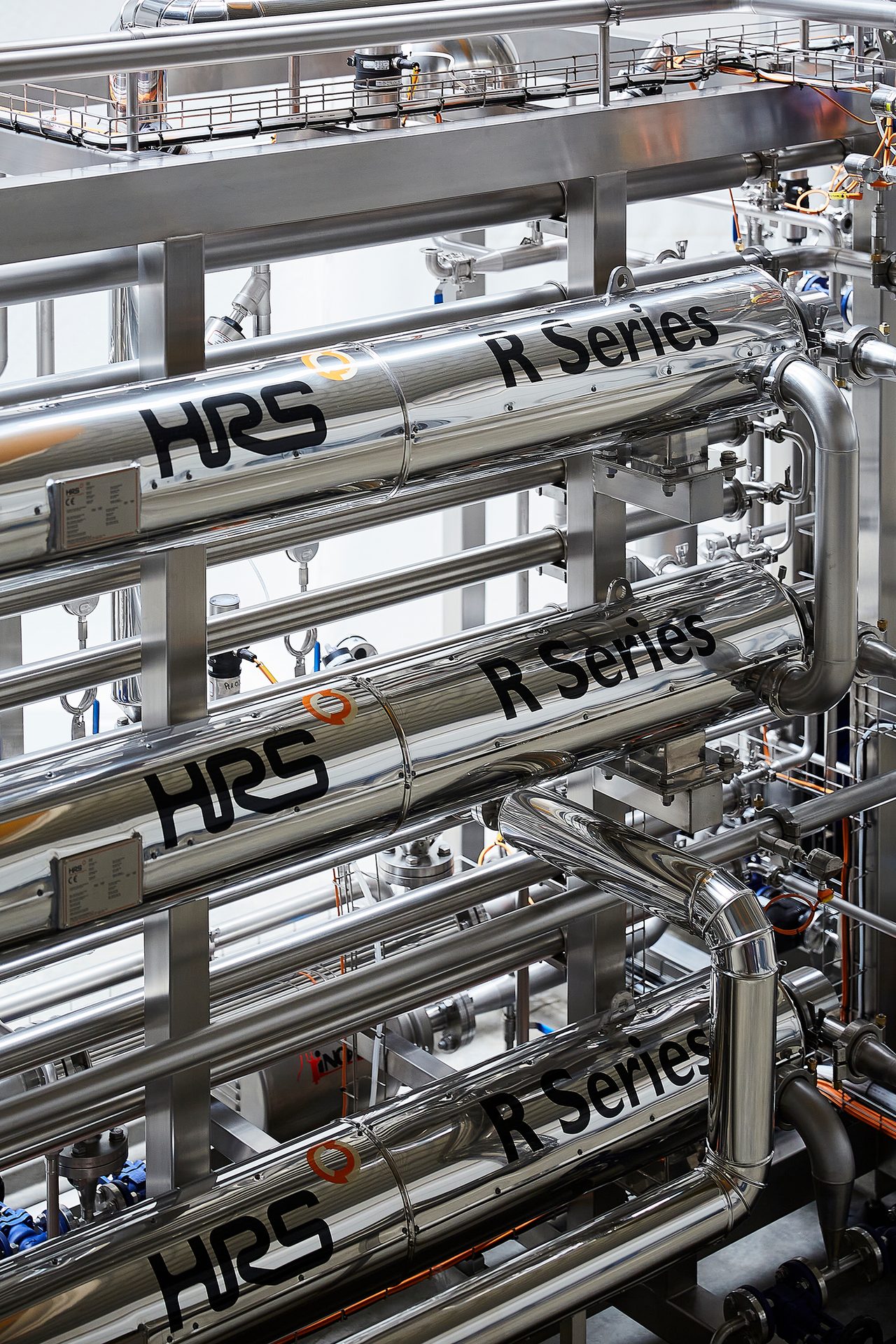
HRS developed a system to temper chocolate based on the HRS R Series.
Photo courtesy of HRS Heat Exchangers.
Total cost of ownership
ROI and total cost of ownership (TCO) often make or break an equipment purchase; for heat exchangers, Barnes says that durability and high-quality construction justify premium pricing, but processors must consider installation costs when evaluating TCO. He notes that installation costs often meet equipment costs.
Nicolosi recommends evaluating full lifecycle costs, looking beyond the initial purchasing price. “These include energy consumption, maintenance and spare parts, cleaning requirements, and operational downtime. The main cost for a heating unit is typically the utility cost,” she says.
To keep utility costs low, Nicolosi advises processors invest in a high degree of heat recovery from the start. “TCO goes very much hand in hand with the sustainability of a specific heating technology. What is good for the environment is typically good for the TCO as well,” she says.
While initial cost is important to consider, McCarron recommends also evaluating heat recovery potential, pressure drops and required pump size, as well as gasket count, tube accessibility and service life.
Hale concludes that heat exchangers are not just relevant in dairy processing. They are widely utilized across the dairy sector, including areas such as waste and water treatment, slurry and manure management, anaerobic digestion and material recovery from waste streams. DF