By Brian Berk, Editor-in-Chief
Dairy Foods Extra
Kathie Canning is editor-in-chief of Dairy Foods.
Contact her at 847-405-4009 or canningk@bnpmedia.com.
Protein may be the key to the future of dairy
Danone hosted a big protein event at its Colorado headquarters.
Form left to right, Takoua Debeche, Dr. Katrien Van Laere, Dr. Shawn Hueglin and Dr. Susan Zaripheh speak during the "Unlocking New Frontiers in Protein Science" event in Louisville, Colo.
Photo courtesy of Albert_Karimov / iStock / Getty Images Plus
There is perhaps only one word that could shape the future of the dairy industry: protein. Count Danone North America as “all-in.”
On Nov. 20, 2025, the processor hosted a six-hour event solely about protein at its Louisville, Colo., headquarters, featuring interactive experiences, a tour of its Pilot Plant, educational sessions and more. The event, titled “Unlocking New Frontiers in Protein Science,” was emceed by Peloton fitness instructor Jess King, who kicked off the event with a brief meditation session for all in attendance, reminiscent of one of her workouts.
“If you don’t have your health, nothing else matters,” King says, who subsequently led a panel discussion featuring Dr. Katrien Van Laere, Danone’s senior vice president medical and nutritional science ELN Research and Innovation, and Dr. Susan Zaripheh, chief research and innovation officer for North America.
“Protein gives us strength. It leads to resilience and overall health,” says Van Laere. “Gut health, immunity, mood and metabolic health are among the things we always look at with our products.”
Zaripheh adds: “We are not just here to feed. We are here to nourish. We have to deliver healthy food to as many people as possible. To do so, we must understand all stages of life.”
Following these opening remarks, Van Laere and Zaripeh were joined by Dr. Shawn Hueglin, senior sport dietitian at United States Olympic Committee, and Takoua Debeche, Danone’s chief research and innovation officer, for a session titled “What Gives Protein Its Power.” Van Laere explained the differences among proteins, and the 20 essential amino acids, of which 11 are synthesized by the human body with the remaining nine essential amino acids only obtained through diet. “Protein is important for gut health and satiety. It is essential for people of all life stages, from babies to cancer patients and the elderly,” she notes. “Digestibility of proteins is really important. We need to educate about protein better.”
Hueglin adds there are several misconceptions about protein that need to be debunked. “Dairy being blamed for acne for female athletes is one of them,” she reveals. “Dairy being blamed for GI [gastrointestinal discomfort] is another.”
Zaripheh notes that consumer focus on the number of grams of protein people consume daily is only part of the health equation. “How frequently do you consume it? When do you consume it? Not all proteins are equal. It’s the quality of protein that matters.”
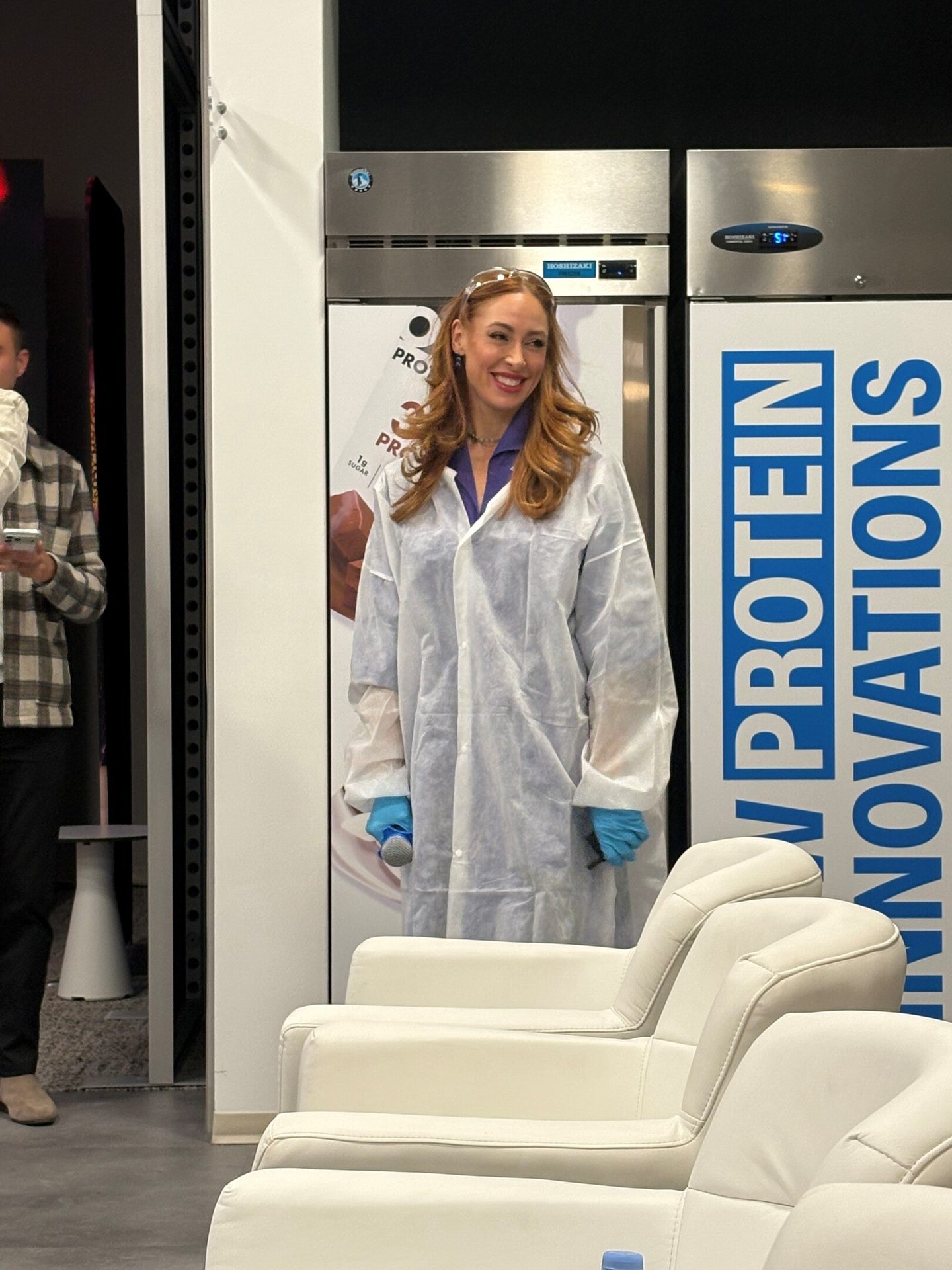
Emcee and Peloton fitness instructor Jess King dons a smock she wore following her visit to Danone’s Pilot Plant at its headquarters.
The future of protein
One of the most fascinating aspects of the Colorado event was looking into the future of protein, which was followed by a discussion about the future of fitness with dairy protein. During the former session, Debeche was joined by Dr. Ardy Van Helvoort, senior director research and innovation nutritional physiology and functional nutrients at Danone Nutricia Research. Van Helvoort stressed consumers must continue to feed muscles with protein. “Your muscles are really important for vitality. Protein is a really important building block for all systems of your body.”
Van Helvoort offers an example of protein’s importance because every day, 2% of a person’s muscle is replaced. “So, in three months, all of our muscle is replaced,” he notes. “We must continue to feed muscles with protein,” adding the morning is the best time to consume protein. “That is when the diet lacks protein the most.”
Debeche continues protein is the main way to stay strong as we age. She expects to see the future bring more tailored solutions for individuals in different life stages. Another prediction: “We will be exploring biotechnology to try to produce protein with specific amino acids while also providing great taste.”
During the future of fitness with protein speech, Whitney Evans, director of Nutrition & Scientific Affairs at Danone North America, and Jennifer White, brand director at Danone, maintained that consumers are craving more information about protein. “By 2050, 25% of Americans will be 65 or older. Consumers are more empowered than ever to make the healthy choice,” Evans relays.
Adds White: “Consumers need to easily understand labeling, which provides information about what they want and need. We must make sure we have transparency in labeling for all ingredients.”
Plant-based protein
Shifting gears. Danone experts discussed plant-based protein. “We are doing a lot in specialized nutrition to unlock the power of plants,” Diego Rosso-Gonzalez, research and innovation director, Plant Based Beverages and New Technologies at Danone, asserts. "The plant world has 30,000 species. Not all are edible, but we continue to discover plants and the benefits they provide. The future is bright."
Amanda Blechman, Danone’s director of Nutrition and Scientific Affairs, also stressed the importance of the U.S. Food and Drug Administration (FDA) in March 2024 announcing the first-ever qualified health claim for yogurt. The claim in its entirety states, “Eating yogurt regularly, at least two cups (three servings) per week may reduce the risk of type 2 diabetes, according to limited scientific evidence.”
In November, Danone led the “Group Chat: Type 2 Diabetes Nutrition Edition,” which offered a multi-faceted educational campaign across retail and digital media. The initiative aimed to help people take better control of their health by meeting them where they’re naturally seeking out nutrition information and solutions. As part of the effort, Danone North America hosted an expert-led “Ask Me Anything” session on Reddit to help spread awareness of the role nutrition can play in reducing the risk of type 2 diabetes, in addition to offering diabetes-focused continuing education opportunities for healthcare professionals and offering additional resources to consumers throughout the month.
“The qualified health claim is extremely important. Eating nutritious food is like opening a savings account for your future health,” Blechman shares during the event.
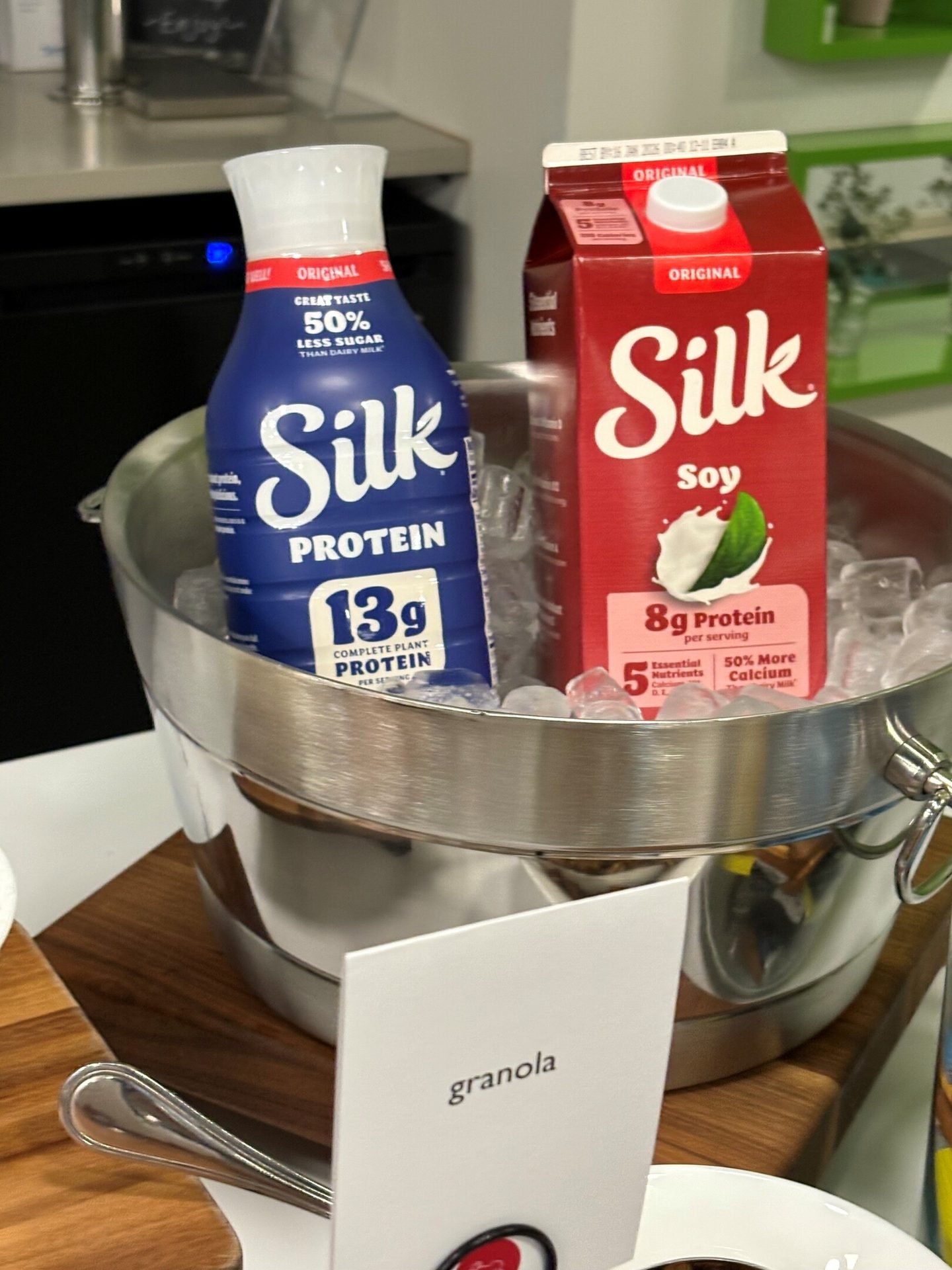
Attendees got to enjoy several Danone products during the protein event, including Silk beverages.
What the data shows
Leigh ODonnell, shopping and retail insights, Category Analytics, Product Evangelist for Kantar, delivered the closing keynote speech, exclaiming “Protein is having a moment. It is the No. 1 nutrient consumers have been trying to get into their body for the past five years.”
According to ODonnell, 23% of consumers are currently following a high-protein diet and 61% are increasing their protein intake. She adds that not many products sold in retail locations say they are GLP-1 friendly. “This is a big opportunity for the industry,” she asserts. “In 2025, we expect the GLP-1 market was [valued at] $150 billion. More effective shots and pills should come out in 2026 [driving more growth].”
ODonnell did note some brands, such as Conagra and Nestlé, have introduced new brands with GLP-1 friendly labels. Since beginning to take GLP-1 medications, Kantar research cites many foods have been consumed more often, led by fresh fruits/vegetables (52%), healthy snacks (39%), vitamins/supplements (38%), chicken/seafood (36%), adult/sports nutrition (33%), yogurt (31%), eggs (28%), fresh-prepared foods (27%), non-dairy/dairy alternatives (25%), non-alcoholic beverages (25%) and plant-based protein (21%).
However, a Kantar study concludes that 80% of consumers do not know how much protein they need to consume, and among the other 20%, some have incorrect information. “Forty to 50% of GLP-1 users say they are switching retailers because they need more info,” ODonnell says. “One thing that may help is the Yuka app, where people can scan product labels on their foods and a receive a score on how healthy they are.”
Despite few GLP-1 labels currently on foods, ODonnell states many products have the word “protein” on the label. In fact, this number totaled 47,000 products on store shelves at the end of 2025, Kantar research reveals. “Despite this, 42% of shoppers say they would like to see more high-protein products,” ODonnell maintains, adding “protein is complicated” and it “can be difficult to prepare meals specifically based upon protein. People do not want to work hard to get their protein.”
The daylong event concluded with a dinner at The Kitchen Bistro in nearby Boulder, Colo. But before consumers departed Danone headquarters, Zaripheh offered these closing remarks: “Not all protein is created equal. It is time to elevate the story.” DF
Photos by Brian Berk