INSIDE THE PLANT
Made with Love
Maola produces all of its gallon jugs in house, aiming for monthly production of 1.5 million bottles.
Processing nutritious, delicious whole, 2% reduced fat, 1% lowfat, 0% fat free and 1% lowfat chocolate milk — which includes a full suite of products for schools while in session — is all in week’s work for the plant operations team at Maola Local Daries in Newport News, Va.
Located in Southeastern Virginia, the Maola Newport News plant, which includes a cooler, a case room, and dry storage capabilities, has reinvented itself from the inside out. Using a multidisciplinary approach, 150 team members are transforming the 64-year-old plant’s culture, systems and results through employee-driven innovation and operational discipline.
“Maola Newport News is more than just a plant — it’s a symbol of our cooperative’s long-term vision,” notes Rick Meier, Director of Operations who first joined the dairy processing company in 1997 as quality assurance manager.
“Built in 1962, this plant is the only greenfield facility constructed by our farmer-owners from the ground up,” he continues. “Today, we’re a vital hub for dairy processing in Virginia and North Carolina, supplying a complete line of HTST [high-temperature short-time] white and flavored milks, buttermilk and ice cream mixes in gallons, half gallons, quarts, half pints and bags.”
By Barbara Harfmann, Senior Editor
Maola Newport News expands plant efficiencies in an evolving dairy landscape.
Made with Love
Maola Newport News is just one of four dairy processing and two ingredient plants operating under the Maola Local Dairies umbrella, notes Jon Cowell, CEO of Maola Local Dairies, whose main headquarters is in Herndon, Va.
Maola Local Dairies was founded in 1920 as Maryland & Virginia Milk Producers Cooperative Association before the dairy processor adopted the Maola name, which was originally acquired in 2003.
“In 2024, we unified our consumer-facing identity under Maola Local Dairies to reflect our broader geographic reach as one of the Mid-Atlantic’s most influential dairy organizations,” Cowell says. “Our full suite of Maola dairy products can be purchased in more than 3,300 stores from New Jersey to South Carolina, including Costco, Food Lion, Walmart and Giant Foods.”
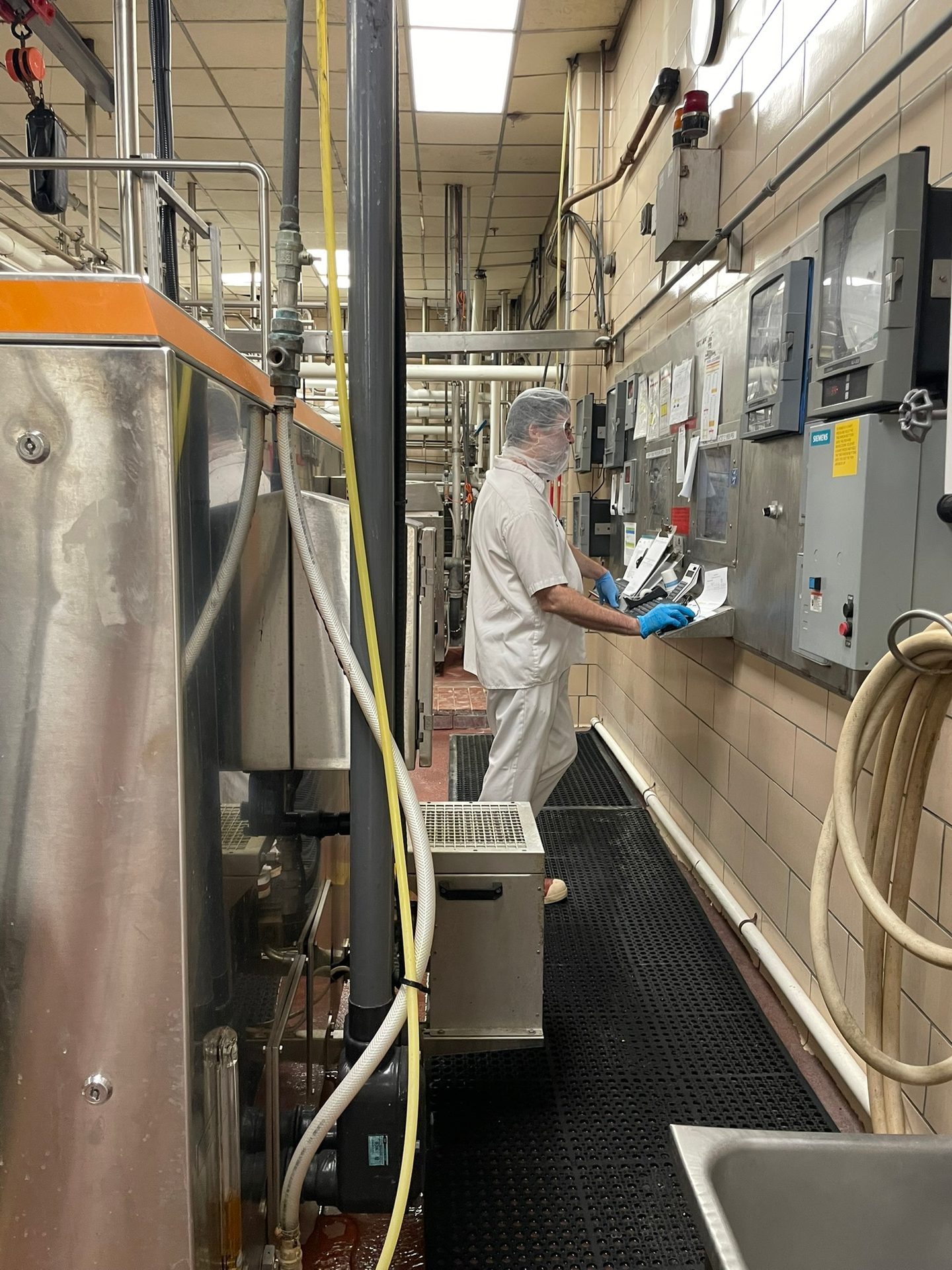
Maola's employees are the lifeblood of its plant operations.
Strengthening plant operations
In addition to gaining insight from Meier, Dairy Foods sat down with Kari Winnie, Plant Manager, Christian Reid, Quality Assurance Manager, Eddie Barker, Plant Engineer Manager, and John Cuny, Chief Engineer, for a wide-ranging discussion about plant safety, significant filler and blow mold efficiencies, and other innovations that are strengthening plant operations.
It all starts with testing and processing sustainably produced raw milk received from family-owned dairy farms in Virginia.
“We have staff for three shifts 24 hours a day,” Winnie relays. “Our production department typically processes milk six days a week, and our shipping department runs seven days a week to ensure the freshest milk is delivered to our customers. The maintenance/engineering department is on-site seven days a week taking care of equipment. Each team member knows his/her job and is pivotal to our success.”
Since the plant’s founding in 1962, Maola Newport News has consistently manufactured milk using one process: HTST (high-temperature short-time). Different than ultra-pasteurized milk, which is produced by passing pasteurized milk through a specialized, fine-pored membrane under pressure and then concentrating the larger protein and fat molecules, HTST works by heating the raw milk to at least 161 degrees Fahrenheit, holding the temperature for at least 15 seconds before rapidly cooling it.
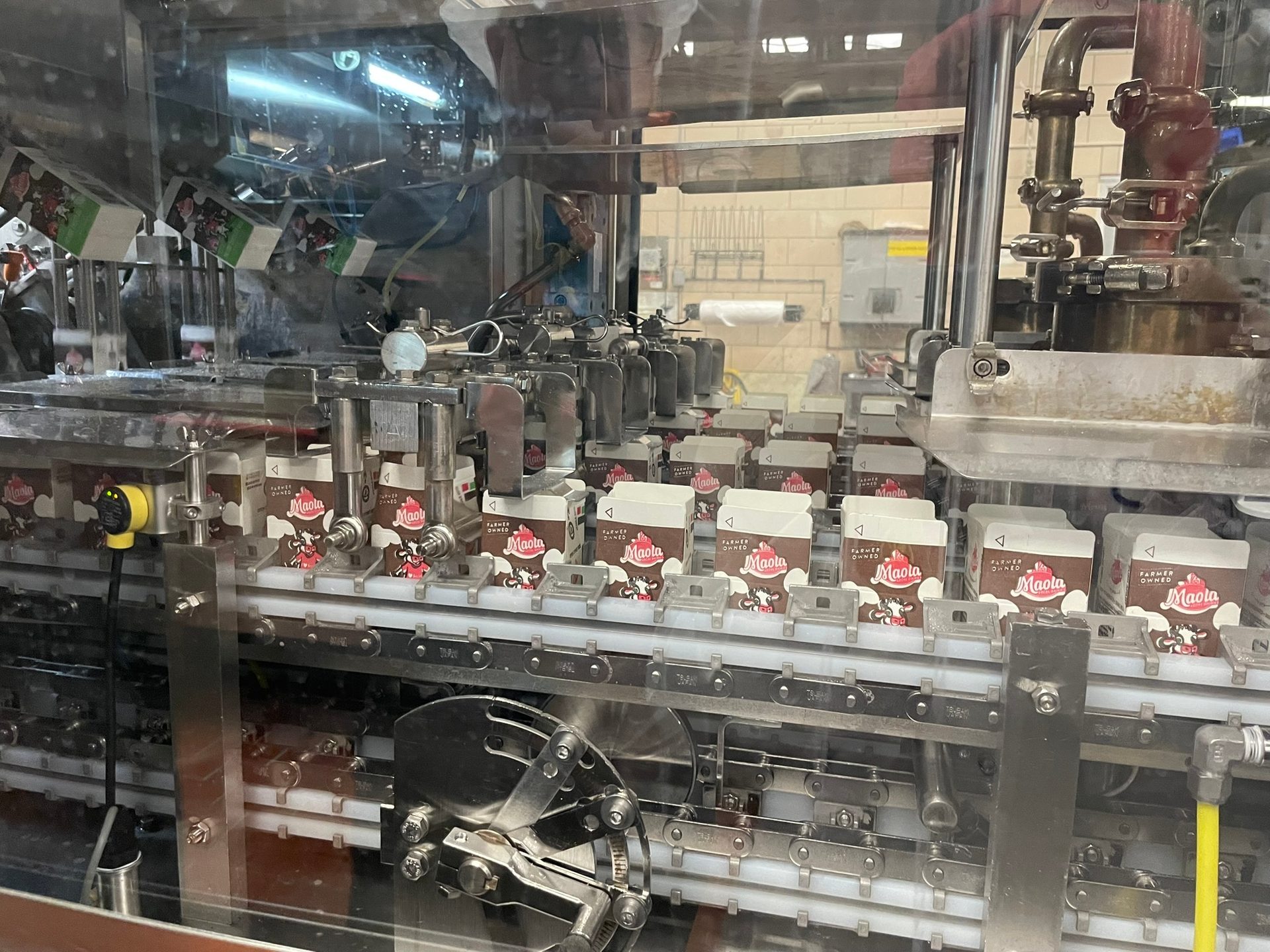
“This brief burst of heat is enough to kill the bacteria found in raw milk while preserving most of the flavor, texture and nutritional value,” Meier explains.
Partnering with retailers on their own labels is also a part of the plant’s marketing efforts, Meier says. He points out that the plant produces products under both the red-logoed, farmer-owned Maola brand and several private-label brands for large retailer chains in the Southeast.
When it comes to distribution, Maola prides itself on “farm to shipment in 48 hours” to customers utilizing one of the company-owned fleet trucks that deliver to branch sites throughout the Southeast as well as smaller route trucks that typically deliver to schools and smaller convenience stores.
Maola Newport News provides milk in 8-ounce half-pint cartons and 8-ounce bottles to schools throughout the Southeast.

School milk, military supplier
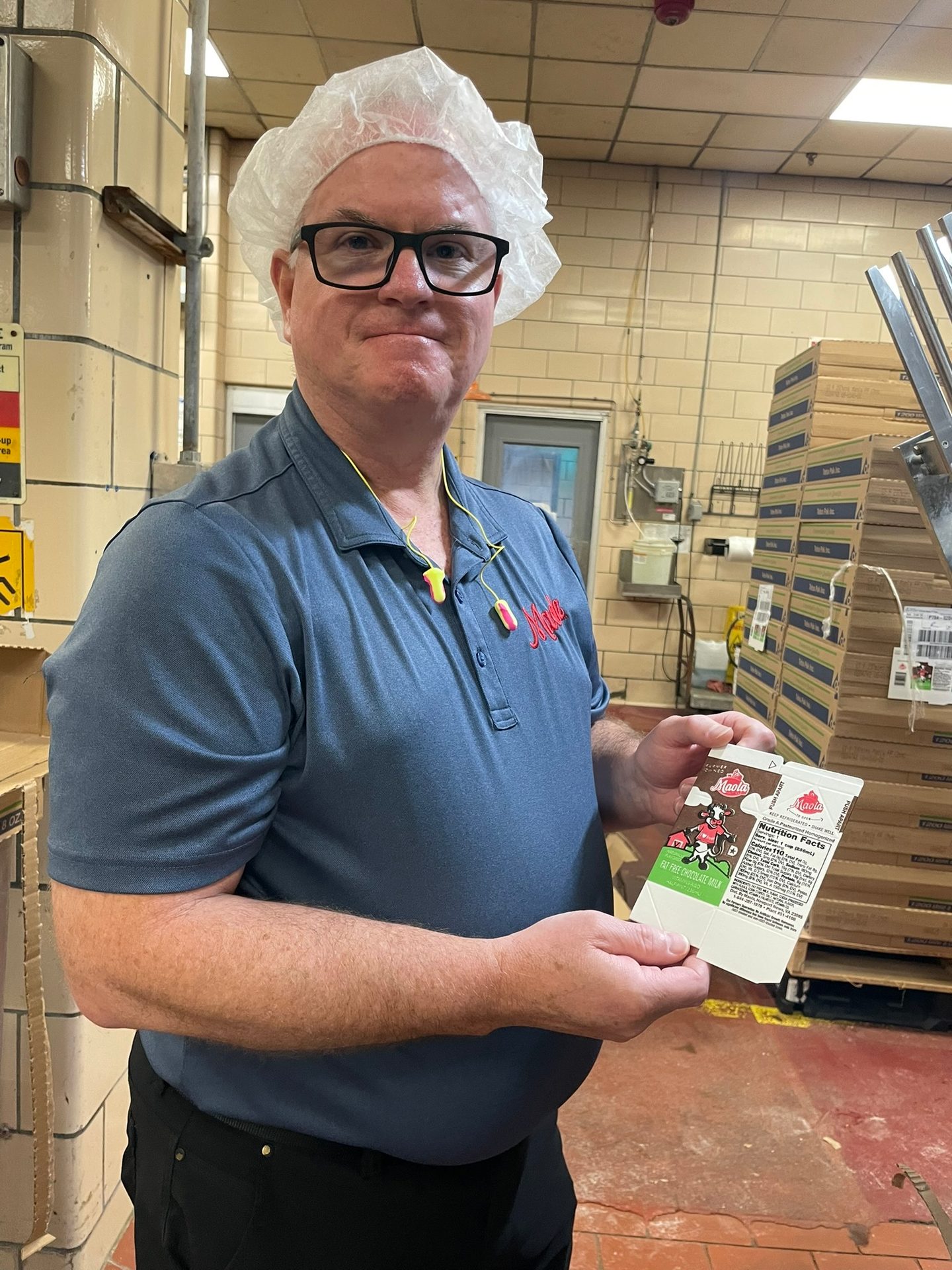
Barker explains that Maola is the only dairy plant in Virginia supplying school milk — whole milk, 2% reduced fat, 1% white, and fat-free chocolate and fat-free strawberry milk — in 8-ounce bottles and 8-ounce half-pint cartons to nourish kids, tweens and teens in the Southeast through the Maola distribution network.
Maola’s naturally flavored 157-calorie 1% low-fat and 110-calorie fat-free chocolate milks, which are made with less sugar and less calories than 208-calorie whole chocolate milk, still tasted creamy, delicious and decadent, Dairy Foods discovered during a tasting.
The recently signed Whole Milk for Healthy Kids Act of 2025 cleared the way for whole and 2% milk to return to school cafeterias. The Maola team has advocated for this change and is prepared. They already have these two items in their full suite of school products, including flavored milks, presenting choices for schools.
Barker notes that the dairy also is a critically important supplier to government and military commissaries and ship-to-shore businesses. Sustainable 5-gallon, bag-in-box products also are shipped to aircraft carriers for further disbursement to Navy vessels at sea, Barker adds.
In addition to its high-quality, fresh milk SKUs, Maola Newport News also produces whole buttermilk, 1% buttermilk, and soft-serve ice cream mixes. Available in both 3.5% and 5% fat levels in plain, chocolate, and vanilla flavors, the ice cream mixes are used at fast-food ice cream chains and fast-casual restaurants to create indulgent treats.
The Maola Newport News team includes, l. to r., Eddie Barker, Plant Engineer Manager, Kari Winnie, Plant Manager, Rick Meier, Director of Operations, Christian Reid, Quality Assurance Manager, and John Cuny, Chief Engineer.
Blow mold and filler upgrades
Operation-wise, Chief Engineer John Cuny highlights the importance of investing in plant upgrades that increase efficiencies.
The cost-saving blow mold process, which helps produce 85,000-gallon jugs daily used for Maola milk, was a recently completed project that helped to create cost savings for the plant. The plant now has a total of two blow mold machines that produce gallon bottles in house.
A key area of continuous improvement for the cooperative — blow mold efficiencies — has not only generated annual savings, but shaved the time to make a bottle by one second.
While one second might not seem like much, that one-second reduction equates to an extra 1.2 million bottles of year per blow mold, according to Cuny. This was accomplished by replacing bearings, adding new plates, which more securely hold the mold that forms the bottles, changing the air system and adjusting the speed to make bottles quicker, he says.
“Built in 1962, this plant is the only greenfield facility constructed by our farmer-owners from the ground up. Today, we’re a vital hub for dairy processing in Virginia and North Carolina, supplying a complete line of HTST white and flavored milks.”
—Rick Meier, Director of Operations at Maola Newport News
Barker also weighs in: “A cycle time averages eight seconds to 11 seconds and we’re making six gallon bottles every cycle. Our goal is to produce 1.5 million bottles a month, and we’ve achieved that goal every month but one. Last July, we produced almost 1.9 million bottles and that’s running 24-7 for six days a week. Kari is our efficiency expert who has done a great job of helping us speed up the machines.”
Additionally, team members are rewarded with special green jackets (like the prestigious green jacket worn by winners of the Masters golf tournament) and “Maola Record Breaker” patches each time they produce more than 30,000 bottles in an eight-hour shift, four times a month.
Since Cuny joined the team two years ago, the Newport News plant has added a gallon bottle handling room that allows the team to ensure there is enough bottle inventory available.
“There’s a debagger and bagging machine for handling gallons. We want to make every gallon bottle right here in this facility,” Cuny adds.
Adding mixed-proof valves in 2025 was another area of innovation for the plant. The specialized valves allow the simultaneous flow of two different fluids through the same valve without risk of cross-contamination due to a double seat valve design
“Our fillers have come a long way,” Barker says. “We just added a new five-gallon filler and a two-and-a-half gallon bulk filler that’s completely automated.”
Maola processes a full line of white and flavored milks using high-temperature short-time processing.
Safety and culture transformation
In its nomination for Dairy Foods’ 2025 Plant of the Year, the dairy lauded the culture it has built from the inside out, its relentless pursuit of safety and operational excellence, a structured Toolbox Agenda for shift meetings, and what makes Maola different.
Plant safety within its operations — through its Employee-Generated Work Order Program — has empowered team members to take ownership of plant safety and operations. Now in its third year, the program has resulted in employees documenting more than 265 work orders contributing to a safer, smarter work environment.
The total incident rate (TIR) was zero last year, an improvement from where the plant was five years ago. “Our zero TIR year to date is not just a number — it’s a reflection of our commitment to a true Safety Culture,” the company wrote.
Keeping employees accountable and identifying where improvements are needed ensures the entire team, from supervisors to floor operators, are on the same page. Key areas of weekly focus include: skim and butterfat loss, filler efficiencies, repair and maintenance spend, weekly inventory checks, KPMs and Scorecard reviews, and progress on open work orders.
This attention to detail is working, according to Christian Reid, Quality Assurance Manager.
“Prioritizing our Safe Quality Food (SQF) audits and maintaining high scores isn’t just about meeting a standard — it’s about protecting our people, our products, and the trust our customers place in us every day,” Reid says.
Director of Operations Meier affirms that Maola Newport News’ transformation isn’t just about technology or metrics — it’s about people.
“There’s a shared belief that every employee matters, every meeting counts and every work order leads the team one step closer to excellence,” Meier concludes. “This is what happens when a legacy facility embraces modern culture, empowers its workforce and delivers exceptional results — not just on paper, but in performance and purpose.” DF
Photos courtesy of Barbara Harfmann.