PROCESSOR PROFILE
Raise a glass to a new era
A relatively new CEO at the helm, a major expansion in lactose-free and ultra-pasteurized milk, a Philadelphia plant that has more than doubled capacity in one year, and securing strategic investments of more than $100 million for on-farm sustainability practices.
These are among the major milestones shaping the brand evolution of Maola Local Dairies, Herndon, Va., a farmer-owned cooperative with member farms spanning from New York to South Carolina, six processing plants and more than 1,000 team members.
Jon Cowell, who celebrated his one-year anniversary as CEO in January, previously served as Maola’s Chief Financial Officer since 2018. With $1.4 billion in revenue, No. 37 on Dairy Foods’ 2025 Dairy Top 100 list, in 2024, Maola was named the 13th largest private business in Virginia and No. 64 on National Cooperative Bank’s Co-op 100 list.
The accolades for the company’s business acumen don’t stop there. Cowell also brings his leadership to the board of the Milk Processor Education Program (MilkPEP) and the executive committee of the National Milk Producers Federation, advocating for policies that benefit dairy farmers and the industry.
By Barbara Harfmann, Senior Editor
Maola Local Dairies cements leadership with 3B pounds of annual milk production.
Raise a glass to a new era
Cowell exclusively talks with Dairy Foods about the growth of Maola Local Dairies, which has grown to become one of the Mid-Atlantic’s most influential dairy organizations, what keeps him up at night, and how the RISE strategy is propelling the 106-year-old dairy forward under one powerful, unified direction.
He explains that the dairy’s RISE strategy, enacted in 2025 with his assumption of the CEO role, is designed to bolster the company’s growth and leadership, and drive efficiency and innovation while staying true to the dairy’s over 100-year-old historic roots. The cooperative’s mission: to be a sustainable cooperative that maximizes value for its farmer owners, employees and customers.
The opening of the Maola plant in Philadelphia was a proud day for staff.
The company-wide RISE strategy is dedicated to:
- Strengthening its commercial position by becoming more consumer-focused and expanding both Maola branded and private-label partnerships.
- Improving operational efficiency through targeted investments in manufacturing and logistics.
- Doubling down on innovation and sustainability, supporting farmer-led stewardship projects and securing more than $100 million in third-party funding for on-farm improvements.
When asked what sets Maola apart from other cooperatives, Cowell immediately responds: Sustainability.
“Our biggest differentiator is sustainability,” he proudly states. “Every member farm has a dedicated sustainability specialist, and we’ve secured over $100 million for on-farm practices. We’re deeply committed to healthy land, healthy animals, and healthy communities.”
Maola is “incredibly grateful” for the partnership of non-governmental organizations and for-profit organizations like Giant Food, Turkey Hill and the Alliance for Chesapeake Bay for grant funding, Cowell says.
“We are turning our sights to a new peak in our farmer-owned cooperative. As we make strategic investments in our farms, our network of plants, and our top-notch staff and customers, we will create a milk ecosystem that allows us to deliver Maola dairy products to every home on the East Coast.”
—Jon Cowell, CEO of Maola Local Dairies

A history of success
Every dairy cooperative has to start somewhere. Maola’s farmer-owned cooperative was founded in 1920 as Maryland & Virginia Milk Producers Cooperative Association, Inc. The Maola name was adopted in 2003 after the brand was purchased. “In 2024, we unified our consumer-facing identity under Maola Local Dairies to reflect our broader geographic reach from New York to South Carolina,” Cowell says.
The Maola name is synonymous with high-quality, sustainably produced milk that is fresh and nutritious and offered in white, chocolate and strawberry in whole, reduced-fat, low-fat and fat-free varieties.
Cowell points out that about 90% of its fluid milk production is white milk, with “whole milk now accounting for almost 50% of all fluid milk sales.”
Roughly 80% of the 1.6 billion pounds of milk Maola Local Dairies produces each year through their consumer product plants is private label, while 20% goes out under the red-logoed Maola name.
When it comes to the national market, Maola’s fluid milk sales are performing “exceptionally well,” according to Cowell. “For the 52 weeks ending in November, we outperformed the national milk category by 11.8%. Cream is up even more — 180%,” he says.
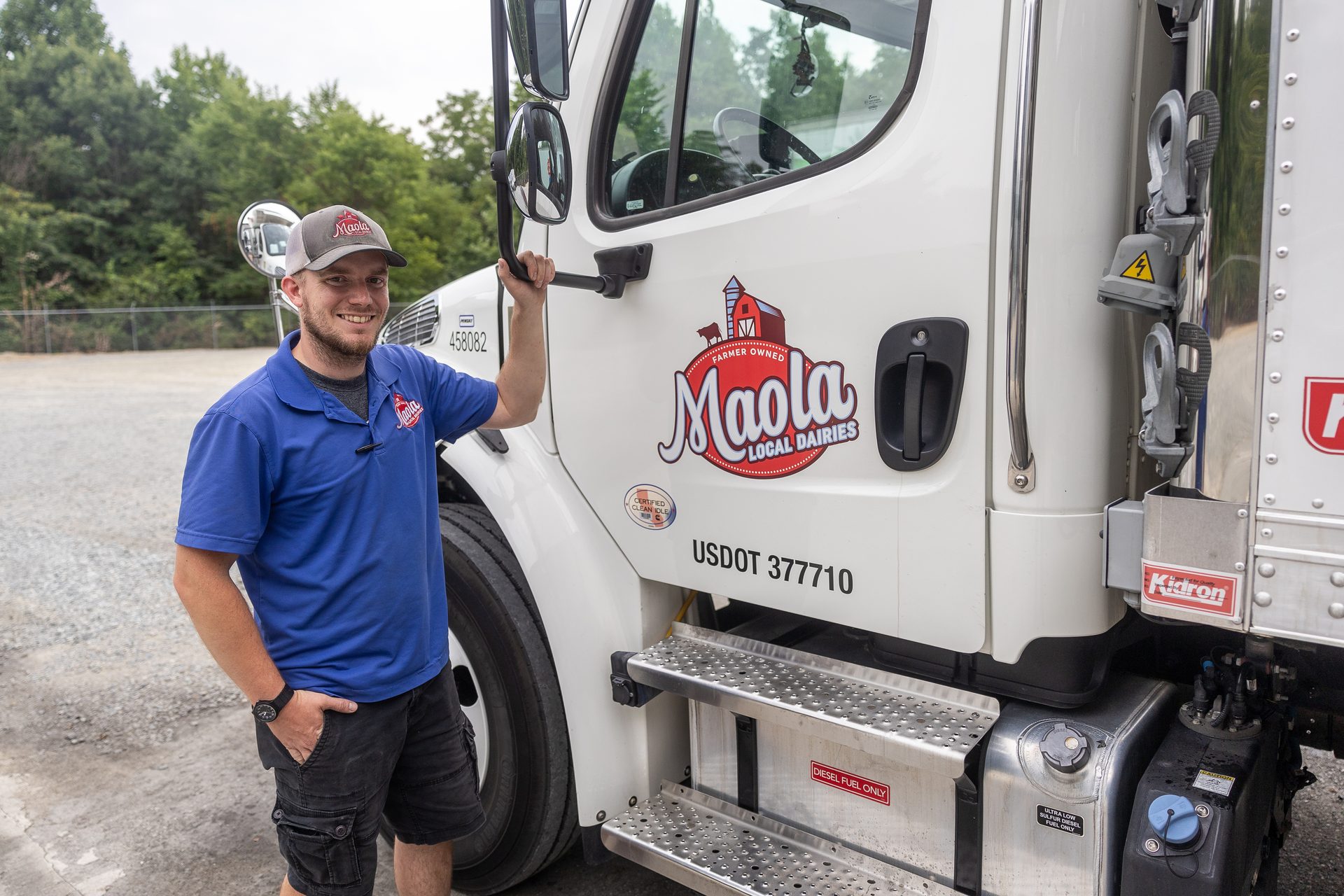
Maola operates more than 150 trucks to transport products.
“Across all six plants, we market about 2 billion pounds of milk each year,” the CEO notes. “Our four consumer products’ plants process more than 1.6 billion pounds, and we’re also selling 1 billion pounds of raw milk to third-party manufacturers.”
Maola milks are available in diverse packaging sizes — from gallon and half-gallon jugs, paper quarts and half pints to half-pint plastic containers and 5-gallon bags for milk dispensing systems.
The cooperative also processes lactose-free milk, cream, half & half, heavy whipping cream, buttermilk and limited-edition eggnog. New products include ice cream, ice cream mixes and 15-ounce aerosolized whipped cream.
Additionally, two plants in Maryland and Virginia produce bulk dairy ingredients including cream, condensed milks, butter and milk powders that are exported worldwide. (See “At A Glance” sidebar).
Maola’s four consumer products’ plants, producing more than 100 SKUs, are:
Maola Newport News, Newport News, Va., founded 1962 (See “Inside the Plant”)
- Products: High temperature short time (HTST) white, chocolate and strawberry milk; buttermilk, ice cream mixes
- Formats: Conventional gallons, half gallons, quarts, half-pints, bags
Maola Landover, Landover, Md., purchased 2006
- Products: HTST white and chocolate milk; buttermilk
- Formats: Caseless gallons, conventional gallons, half gallons, quarts
Maola High Point, High Point, N.C., purchased 2021
- Products: HTST white and chocolate milk; buttermilk; ice cream, ice cream mixes
- Formats: Conventional gallons, half gallons, half pints; scround, pint, 4-quart pails for ice cream
- Maola Philadelphia, Philadelphia, purchased 2024
- Products: White milk, flavored milk, lactose-free milk, creams, half & half, eggnog, ice cream mixes
- Formats: Half gallons, quarts, pints (gable top with or without fitment), 2.5 gallon bags, portion control packs
- Secondary Formats: Regular boxes, display-ready boxes
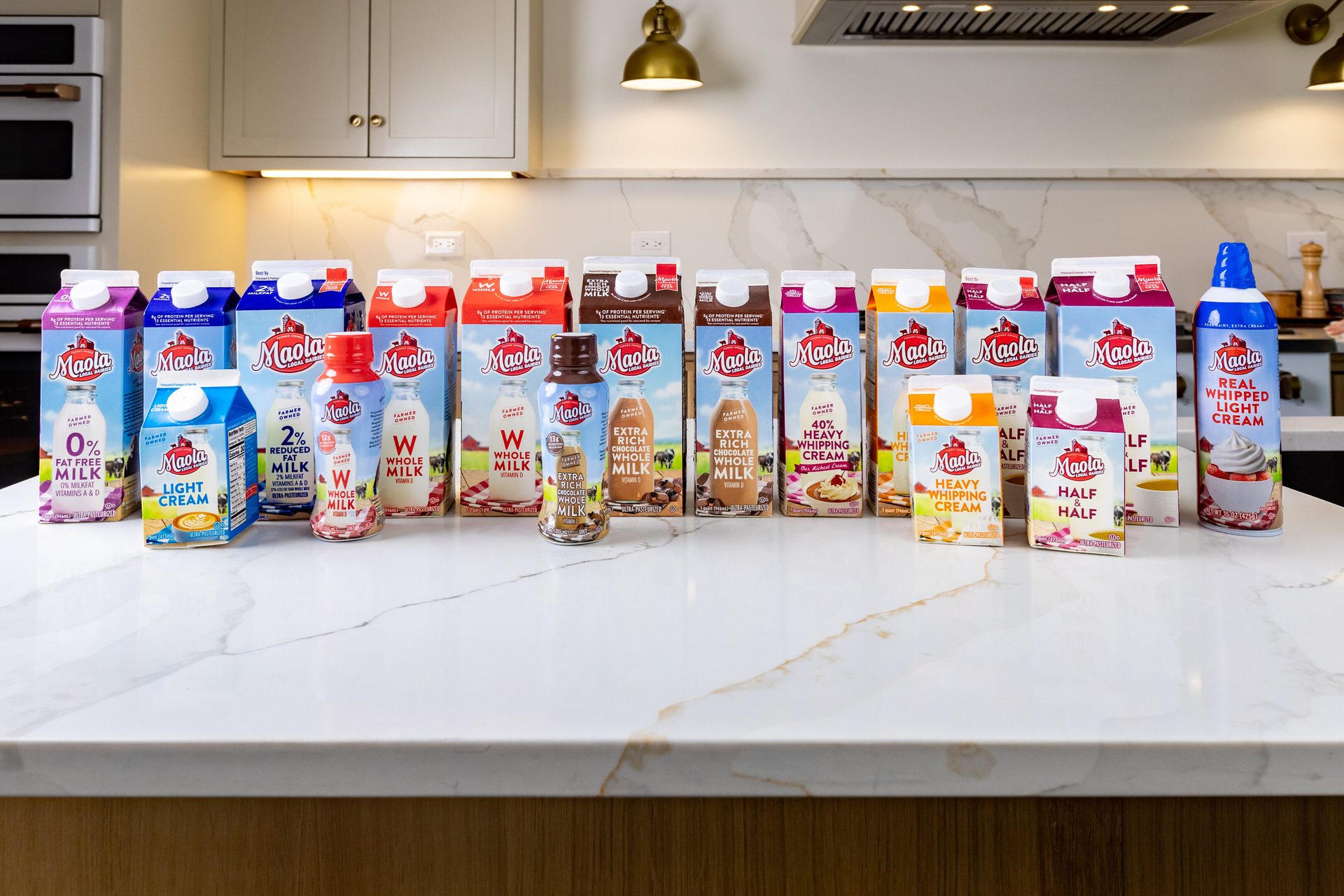
Maola Local Dairies offers more than 100 SKUs of milk, lactose-free milk, half & half and heavy whipping cream.
New areas of product innovation
In 2024, Maola opened up new avenues for success when it began processing lactose-free and ultra-pasteurized milk products as well as aseptic extended shelf-life milks.
“Lactose-free is experiencing double-digit growth,” Cowell explains. “We installed a lactase injection system and launched Maola-branded lactose-free milk in 2025. We also offer Maola whipped cream and a 14% ice cream mix to meet evolving customer needs.”
The 144,000-square-foot Philadelphia plant is running lactose-free milk and other products as showcased above. Since 2024, year-over-year production has more than doubled to more than 16 million gallons annually, Cowell notes.
Since the coop’s beginning more than a century ago, it has typically processed its raw milk from its family-owned farms using high temperature short time (HTST) pasteurization where the milk is heated to 161 degrees Fahrenheit for 15 seconds to kill any pathogenic bacteria.
Ultra-pasteurized milk, on the other hand, is heated to 280 degrees Fahrenheit for a few seconds and then rapidly cooled, while aseptic milk is processed using ultra-high temperature pasteurization to kill any harmful bacteria in the milk and then bottled immediately in a sterile environment into special packaging.
When properly stored and refrigerated, ultra-pasteurized milk stays fresher longer, but should be consumed within seven days after opening.
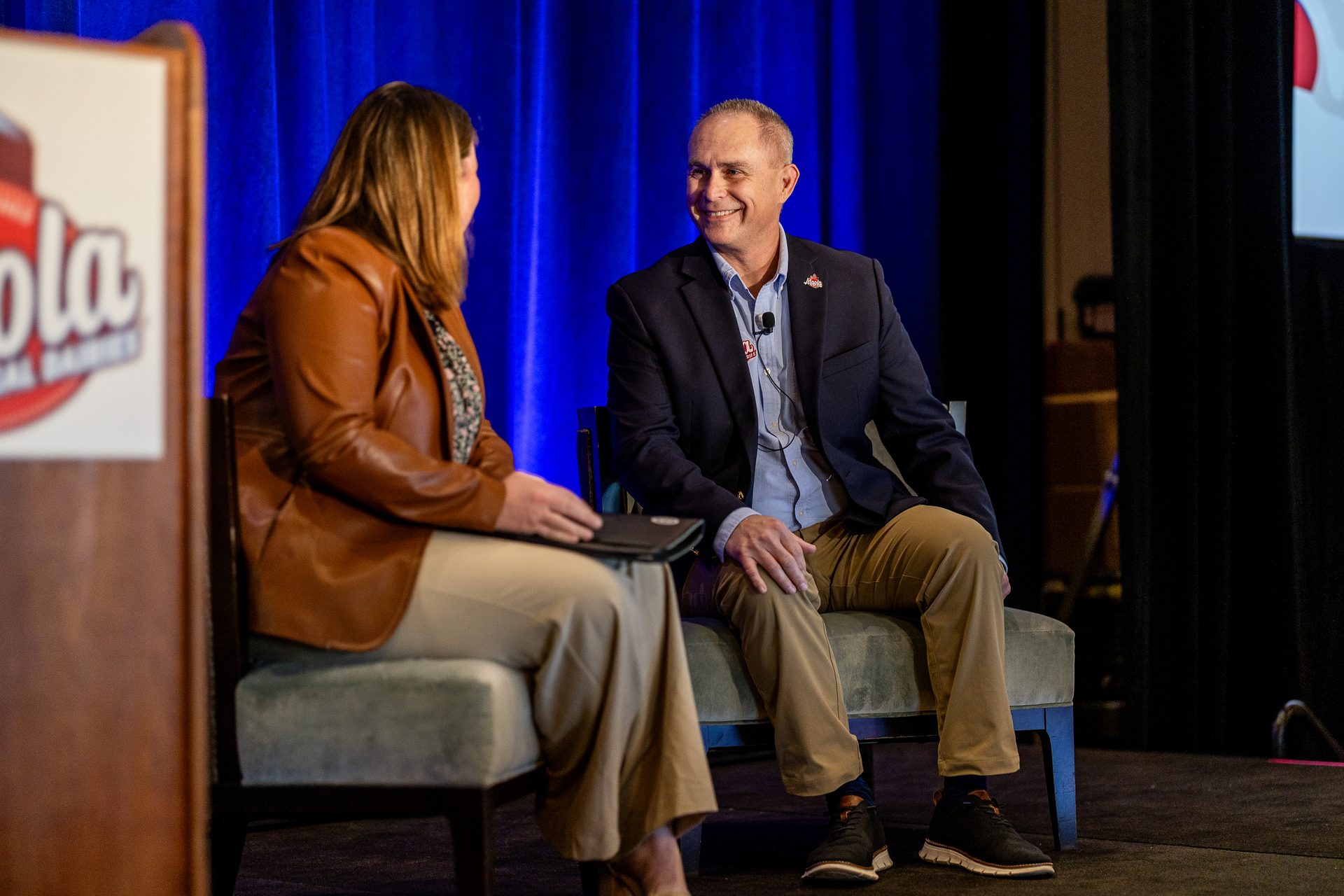
Maola Local Dairies CEO Jon Cowell at one of the company's Annual Meetings.
Yet, maintaining the safety of dairy products and preventing recalls continues to be a major priority for Maola employees, plants and the entire food and beverage industry.
In fact, food safety is the one area that Cowell says keeps him up at night because there are so many facets to stay on top of. These include following rigorous safety standards, ensuring equipment, floors and surfaces are properly sanitized, storing products in “cold rooms” of 45 degrees Fahrenheit or less, and making sure products are safely delivered in temperature-controlled trucks.
To enhance food safety and quality, Maola expanded its food safety and quality teams to more than 40 employees and elevated the head of the FSQR (food safety, quality and regulatory) to report directly to the CEO. It also conducted its first company-wide food safety culture survey and continues to strengthen regular training and communication.
Distribution-wise, Cowell explains that 100% of its farm milk pickup is handled by third-party haulers. Finished products, however, are delivered with a mix of 150 Maola-owned trucks and third-party carriers.
Then, from a network of branch warehouses, Maola’s route sales team makes more than 1,500 local deliveries daily to grocery stores, retailers, schools, restaurants, quick-serve restaurants and military commissaries across Virginia, North Carolina and South Carolina.
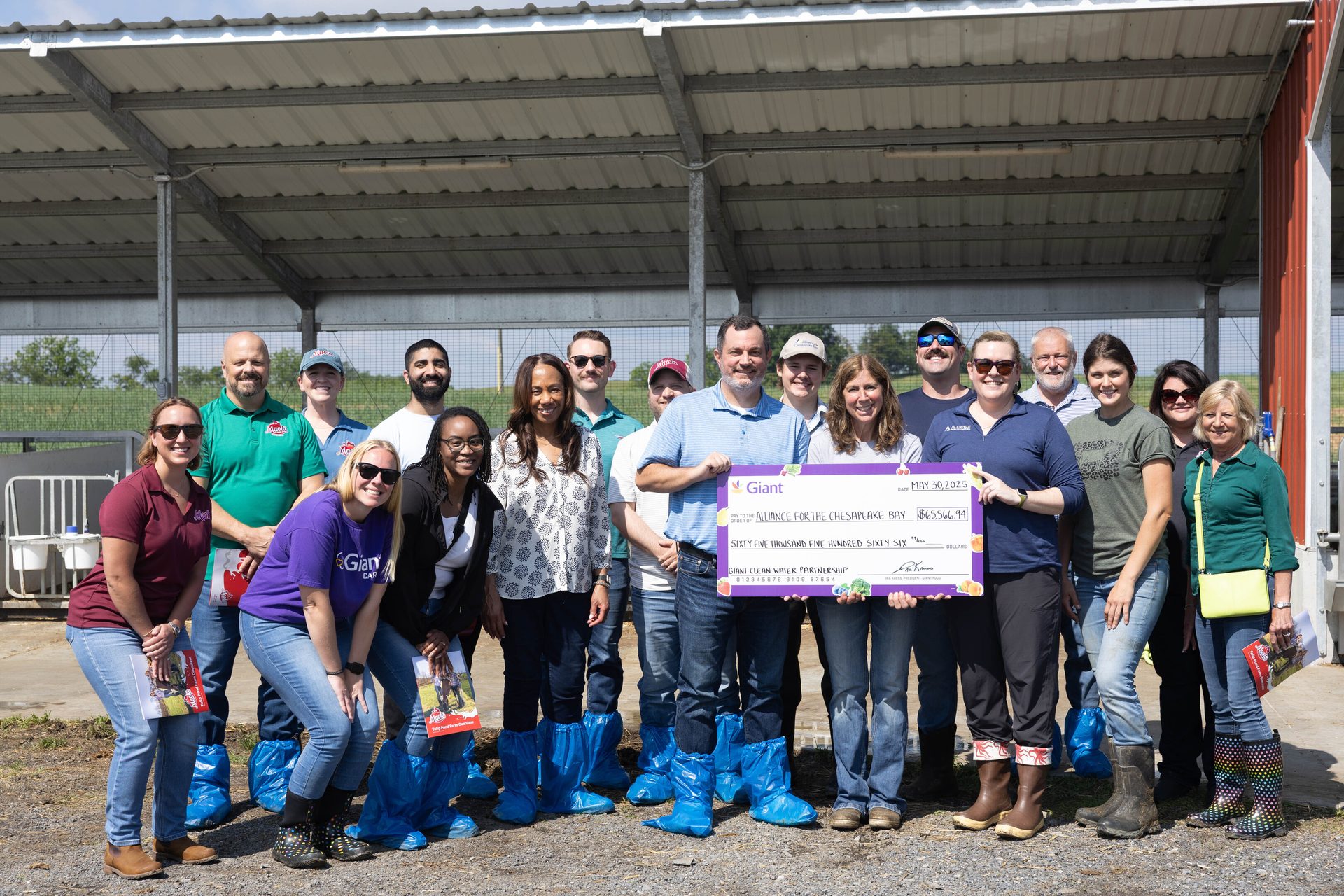
Maola staff accept more than $65,000 from one of its sustainability partners, the Alliance for Chesapeake Bay.
The journey forward
As Cowell guides Maola Local Dairies in 2026 and beyond, the CEO is keenly aware of the industry’s challenges. These include competition from other co-ops, pressure on farmers in populated regions to sell land, ensuring competitive milk prices, immigration policies, managing volatility in the ingredients’ marketplace and tariffs.
Staying ahead of industry trends, what consumers want and where cooperative dollars are invested are focal points for the 106-year-old cooperative.
“We are turning our sights to a new peak in our farmer-owned cooperative,” Cowell relays. “As we make strategic investments in our farms, our network of plants, and our top-notch staff and customers, we will create a milk ecosystem that allows us to deliver Maola dairy products to every home on the East Coast.”
Highlighting that Maola isn’t in the business to just churn out products, the dairy is shifting from “what we can make” to what consumers want to buy.
“Innovation will drive our future — new products, new formats, and continued investment in sustainability and operational excellence,” Cowell concludes. “Our goal is to keep Maola strong for the next 100 years.” DF
MAOLA LOCAL DAIRIES AT A GLANCE
Founded: 1920
Member Farms: 750
Team Members: More than 1,000
Annual Milk Volume: More than 3 billion pounds
Consumer Plants: 4 (North Carolina, Maryland, Pennsylvania, Virginia)
Ingredients Plants: 2 (Maryland, Virginia)
Annual Revenue: More than $1.4 billion
Private Label vs. Branded: 80% / 20% (fluid milk)
Top Growth Categories:
- Lactose free
- Ultra pasteurized
- Whole milk
- School milk
Distribution Footprint:
- 150+ trucks
- 10 branch warehouses
- 2.6 million miles driven annually
Military Presence: Commissaries across Virginia, North Carolina and South Carolina
Export Markets: Mexico, Vietnam, Malaysia, Saudi Arabia, Dominican Republic
Photos courtesy of Maola Local Dairies