AI and sustainability among factors expected to shape the future of packaging
PACKAGING TECHNOLOGIES
The future of packaging can mean a lot of different things. It can mean new technologies that were just showcased at last month’s PACK EXPO show in Las Vegas, areas of growth for the industry, the advancement of artificial intelligence (AI) and robotics, or efforts in sustainability, just to name a few.
In a new blog, New York City-based Research Nester states one thing to look out for in the future is the packaging additives market, which “is on an exciting growth path. Additives play a vital role in product protection, shelf life, and visual enhancement, as well as smart packaging features, which are the key elements of the future of modern packaging. The food and beverage, pharmaceuticals, personal care, e-commerce industries, among others, continue to be on a growth trajectory, and thus the demand for high-performance additives will only be on its increase,” the report says.
The research firm adds that the entry of active and intelligent packaging, the growing influence of nanotechnology, and the use of AI are becoming “key trends that are changing the potential of packaging,” adding the market size of packaging additives, which was valued at nearly $604.3 million in 2024, is likely to be up to $1.08 billion by 2037.
Reasons for this growth include increasing interest in sustainability that is impacting the packaging additives market drastically.
“As consumers, governments, and businesses are moving toward environmentally friendly packaging solutions, so are a need for additives that encourage sustainable packaging,” the Research Nester report notes. “The trend compels manufacturers to be innovative, introduce green additives, including bio-based stabilizers, biodegradable plasticizers, and recycle-friendly compatibilizers.”
In addition, incorporation of AI will “transform the packaging additives industry through increased efficiency and sustainability. AI is creating commotion in the research and development sector by facilitating the acceleration of finding innovative additive formulations,” Research Nester predicts. “Additive manufacturing is increasing the quality and production rate through AI. Real-time monitoring and predictive analytics with the help of AI guarantee robust performance, fewer defects, and an optimal production environment.”
The full Research Nester report can be found at https://www.researchnester.com/reports/packaging-additives-market/6671
By Brian Berk, Editor-in-Chief
Recent PACK EXPO showcased several product solutions.
AI and sustainability among factors expected to shape the future of packaging
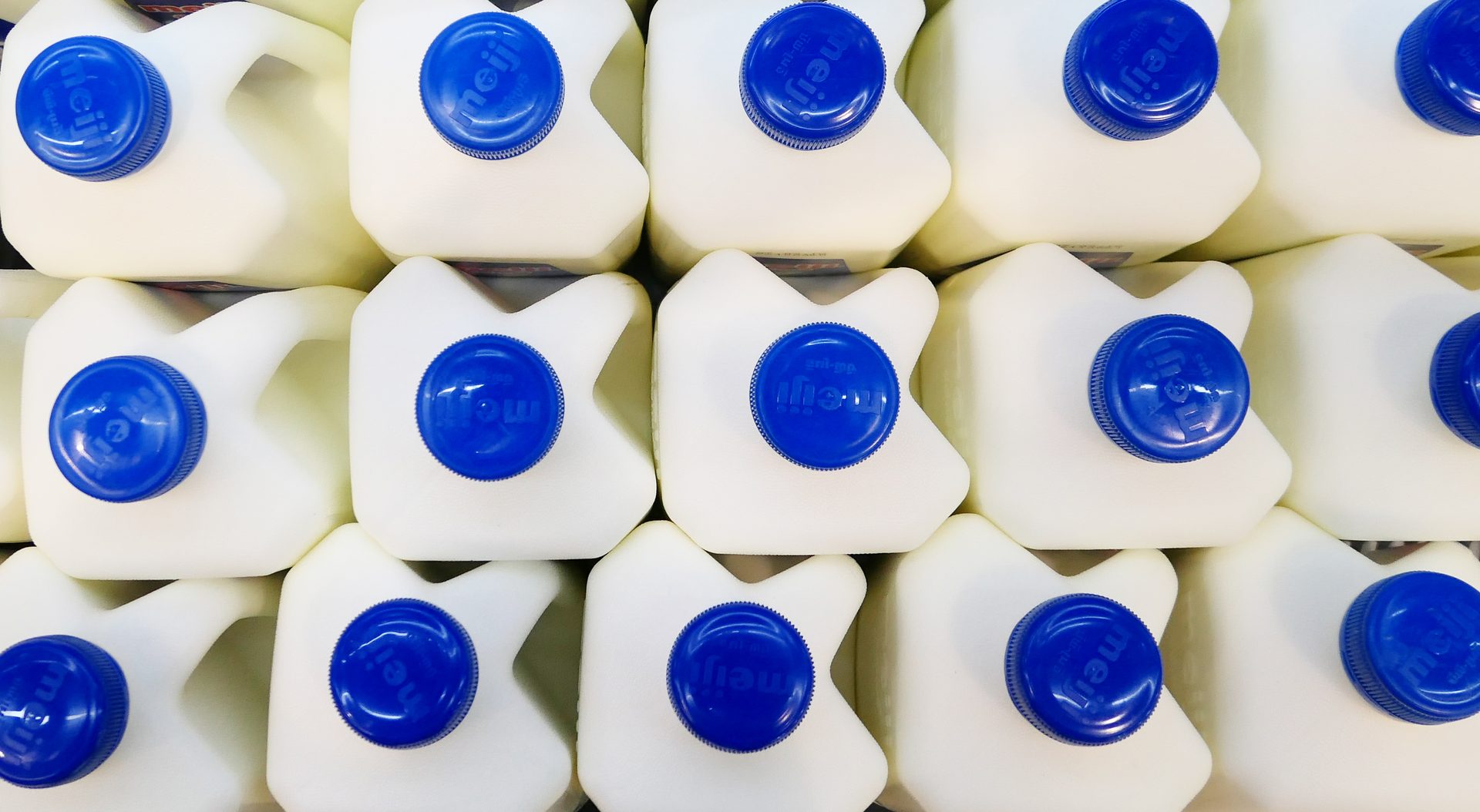
Photo courtesy of RusN / iStock / Getty Images Plus
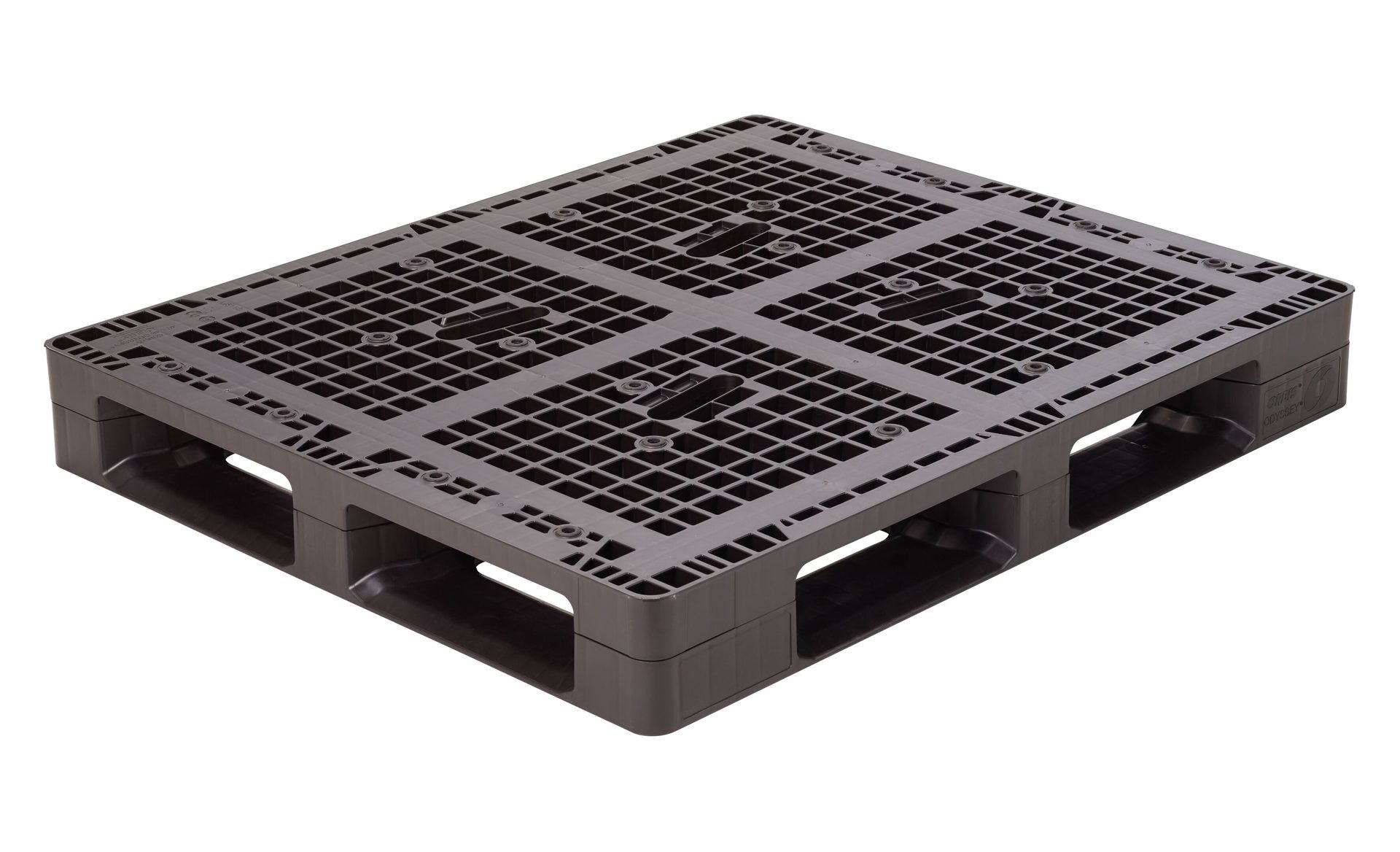
ORBIS Corp.’s 40×48 Odyssey Low Profile pallet is designed to improve load stability with steel reinforcements and molded-in frictional elements that minimize load shifting,
product load damage, and pallet slippage off material handling equipment, the company says.
Photo courtesy of ORBIS Corp.
Current and future trends
Oconomowoc, Wis.-based ORBIS Corp. exhibited at PACK EXPO last month along with its sister company Menasha Packaging in an effort provide solutions for dairy processors that want to streamline production, accelerate distribution processes and reduce labor touch points.
According to Matthew Lochmann, strategic account manager, ORBIS, future packaging trends include:
- Retail Execution Systems and Platforms that support retail and club stores' in store and buy
online, pickup in-store (BOPIS) operations - Retail displays design and data-driven execution that enhances off-shelf visibility for brands
- Turn-key Fulfillment Services for packaging and display needs
- Amazon Transparency program capabilities, including seamless incorporation of
transparency codes into packaging through advanced variable data printing, helping brands
combat counterfeiting and build consumer trust
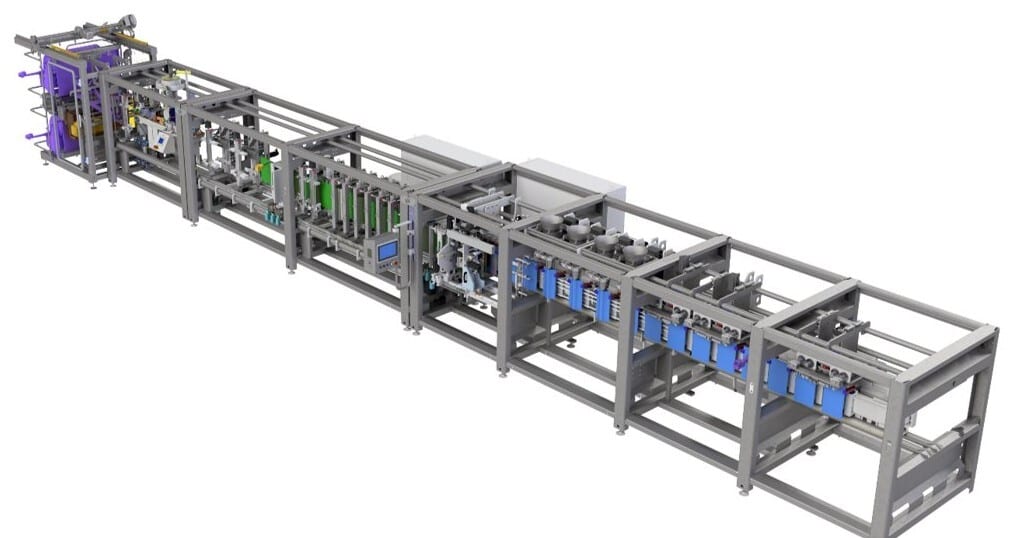
Covington, Ky.-based ProMach, which highlighted its Horizontal form fill seal (HFFS) machines — automated packaging systems that create, fill, and seal pouches or bags in a continuous process — among many other products at PACK EXPO, adds a new trend it has seen is original equipment manufacturers (OEMs) assuming a larger role over project management, including packaging.
“This is largely due to a shift in the way projects are managed. Many factors have contributed to companies slimming down their engineering staffs over the past several years, such as retirements, low interest in manufacturing careers among young people, staffing issues from the COVID-19 pandemic, and others,” says Camilo Sanchez, vice president of sales for the Flexible Packaging Group at ProMach. “This has resulted in a deficiency of knowledge and project expertise, while increasing the time needed for overseeing a packaging line project. But this is where an OEM that is properly set up with resources can take on a larger role.”
Instead of simply sourcing a new HFFS, packaging OEMs are being asked to audit an entire line and make recommendations to help increase speed, efficiency, and accuracy, “uncovering potential benefits that the customer might not have even been aware of,” Sanchez suggests.
“These select OEMs can bring in partner companies that focus on automation processes both
upstream and downstream of the HFFS in areas such as filling, labeling, sterilizing, end of
line, and others, and assume project management for engineering and installation,” Sanchez notes. “Projects like this allow customers to have one central point of contact, and that contact
really serves as a one-stop, full-service provider by connecting the partner resources
together. This level of project management streamlines the planning process, installation,
and start-up curve for packaging lines.”
Sanchez continues that ProMach’s Bartelt division does not see this trend of diminished staff reversing anytime soon, “which makes our roles as project management facilitators even more important. We know the challenges customers are facing today; we are here to help make their jobs a bit easier, and we have been very successful in doing that through the years,” he maintains.
“Many factors have contributed to companies slimming down their engineering staffs over the past several years, such as retirements, low interest in manufacturing careers among young people, staffing issues from the COVID-19 pandemic, and others,” says Camilo Sanchez, vice president of sales for the Flexible Packaging Group at ProMach.
Photo courtesy of ProMach..
Sustainability is always important
Certain to be top-of-mind during both the present and future in the packaging industry is sustainability. Dairy processors increasingly have asked for sustainable packaging solutions, and prior Dairy Foods reports have pointed to an increasing interest from consumers as well.
ProMach’s Sanchez states he has seen both consumer demand and retailer mandates for sustainable packaging increase. “However, running new materials like recyclable films or compostable substrates often means reworking your equipment or sacrificing speed and seal integrity,” he reveals. “To address this issue, Bartelt has created the MAG Series, which is a family of HFFS machines that can run several sustainable packaging formats at adequate speeds to maintain maximum output. These machines are designed to run recyclable and paper-
based films, while not compromising speed to properly seal pouches using thinner or heat-
sensitive films that are often the basis of sustainable materials.”
ORBIS’ Lochmann adds that reusable packaging can provide many benefits. Chief among them are:
- Reduces waste by minimizing single-use packaging and landfill impact
- Enhances durability: Offers better protection and longevity than disposable options
- Lowers long-term costs: Saves money over time through repeated use
- Improves sustainability: Supports environmental goals and reduces carbon footprint
“Many dairy processors have already adopted sustainable, eco-friendly practices that are both
cost-effective and beneficial to the environment,” Lochmann suggests. “Working with an experienced packaging partner to transition to reusable solutions can benefit both sustainability efforts and the bottom line, aligning with dairy processors’ 2030 emissions goals.”
Can AI help?
The aforementioned AI is definitely a buzzword in today’s society. The technology is likely to become more popular in the packaging market, evidenced by Towards Packaging’s prediction that the global market, which reached $2.7 billion in 2024, will expand at a 10.28% compound annual growth rate (CAGR), ultimately becoming a $6.4 billion market in 2034.
“The main reason behind this growth is the rising demand for efficient, sustainable, and customized packaging solutions driven by advancements in AI technologies that enhance design, production, quality control and logistics,” the Pune, India-based research firm states in its report.
Lochmann asserts that: “Automation solves some of the biggest supply chain challenges. Robotics and automated processes support a lack of labor and higher production volumes. It can help companies eliminate human error to improve accuracy, productivity, and efficiency to get products into the hands of the consumer more quickly. Automation technologies assist the movement of materials and goods to improve overall handling.”
A prime example of a dairy processor investing heavily in AI is Switzerland-based Nestlé, which in July announced it was teaming up with Armonk, N.Y.-based technology company IBM to develop new tools that leverage the power of AI to bring breakthrough innovations to life. “This research collaboration has led to the development of a generative AI tool that can identify novel high-barrier packaging materials,” Nestlé states.
“Nestlé and IBM scientists leveraged AI-based processing techniques to construct a knowledge base of known materials from public and proprietary documents. Subsequently, the team fine-tuned a fit-for-purpose chemical language model on this curated corpus, enabling it to learn the representation of the molecular structures,” the company noted in a press release. “…Nestlé will utilize this novel technology to identify future packaging materials, while considering cost, recyclability, and functionality.”
According to Nestlé Chief Technology Officer Stefan Palzer, “This novel AI-powered language model, developed in collaboration with IBM Research, illustrates how Nestlé is leading the digital transformation within the food and beverage industry. In the future, such breakthrough technology could be used to optimize the development of more sustainable packaging solutions across product categories.” DF